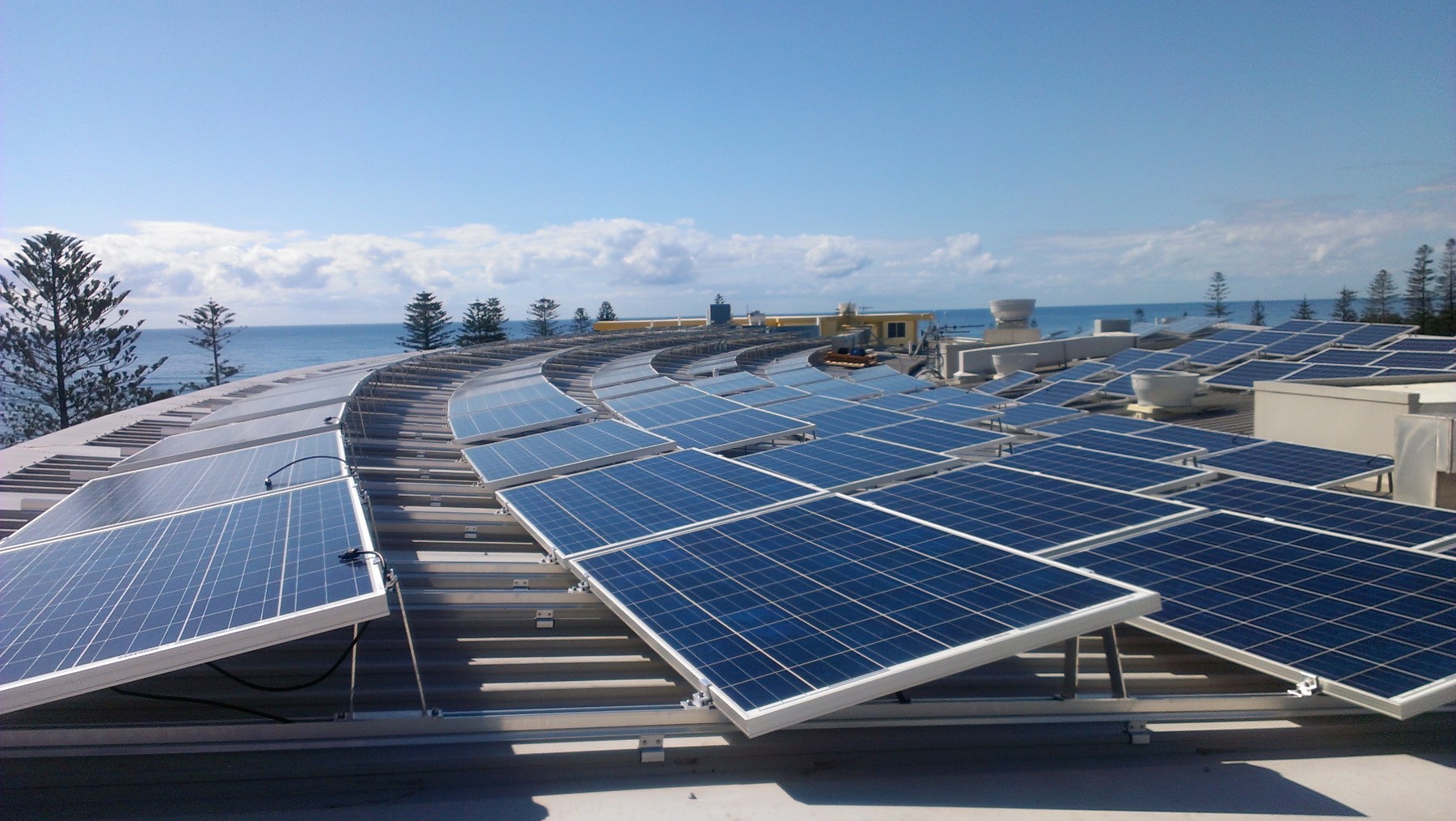
How the Solar Calculator works
Our solar calculator combines three real-world data sources to produce an honest estimate, not a
sales pitch. First, your quarterly bill tells us roughly how much electricity your
household uses each day. Second, your postcode determines the peak-sun-hours
(PSH) for your region — the industry-standard measure of solar resource. Third, your
roof exposure applies a realistic generation derating for shade or sub-optimal
orientation. Together, these three inputs let us recommend a sensible system size, then project
year-1 and 25-year savings using current Australian retail electricity rates and feed-in tariffs.
1
Sizing
We size your system to offset most of your usage during sun hours. Most Australian
homes land at 6.6 kW, 8 kW or 10 kW —
we recommend a standard size you can quote accurately.
2
Generation
Generation = system size × peak-sun-hours × shade factor × ~0.85 system loss.
We apply state-level PSH (4.5–5.5 in QLD/WA, 3.4–4.2 in TAS/VIC/NSW) so the result is grounded.
3
Savings
We split generation between self-consumption (paid at retail rate, ~34 c/kWh) and exports
(paid at feed-in tariff, ~6 c/kWh). Adding a battery lifts self-consumption from ~35% to ~85%.
Understanding your solar calculator results
After you click Calculate my savings, the panel on the right shows four key numbers and
an electricity-cost comparison chart. Here's how to read each one — and what they mean for your
decision to install solar.
25-year net savings. The total dollar value you keep over the lifetime of the
system, after deducting the installed cost. Solar panel warranties run 25 years for performance, and
well-maintained systems regularly exceed it, so 25 years is the standard horizon for residential
solar ROI modelling.
Year 1 savings. Your first-year electricity bill reduction. This is the figure
most relevant to your immediate cash flow — if you finance the system, your repayment should ideally
be less than this amount so you're cash-positive from day one.
Payback period. How long it takes for accumulated savings to equal the installed
cost. In 2025, typical paybacks for an Australian household are 3–5 years for solar-only
and 5–8 years for solar plus battery. If your calculator result is outside this range,
check your bill input — it's usually the largest driver.
System size (kW). The DC capacity of the solar panel array. We round to a standard
installer size so you can directly compare with quotes. A 6.6 kW system uses ~16 panels of 415 W
each; a 10 kW system uses ~24 panels. Browse 270+ panel brands in our
directory to see what's available.
Estimated install cost. The post-STC price most Australian installers will quote
for that system size. It already includes the federal Small-scale Technology Certificate (STC) rebate
— typically $3,000–$5,000 off the gross price depending on size and postcode. For the exact STC
count, run the numbers in our STC Calculator.
CO₂ offset. The tonnes of carbon dioxide your system avoids by displacing
grid-supplied electricity (~0.7 kg CO₂/kWh on the National Electricity Market average). A typical
6.6 kW system offsets ~6 tonnes/year — equivalent to planting roughly 270 trees.
Why estimates vary. Your actual savings depend on your retailer's tariff, your
usage pattern (daytime vs. evening), roof orientation (north is ideal in Australia; east/west costs
~10–15% generation), and your local feed-in tariff. The calculator gives you a strong baseline —
installer quotes will refine it to the dollar.
Solar STC rebate & the Cheaper Home Batteries Program
Australia has two major federal incentives for residential solar in 2026: the long-running
Small-scale Technology Certificate (STC) scheme for solar PV, and the newer
Cheaper Home Batteries Program for home batteries (live since 1 July 2025).
Both reduce your upfront price.
STCs are tradable certificates created when a CEC-accredited installer commissions your system.
One STC roughly equals one MWh of clean electricity generation, multiplied by a postcode rating
(1.0–1.6) and the years remaining until the scheme ends in 2030. STCs are typically traded at
$36–$39 — installers usually claim them on your behalf and pass the value through as an
up-front discount.
The Cheaper Home Batteries Program adds a battery-specific incentive on top of any
existing state rebates. It pays roughly $372 per kWh of usable battery capacity in 2025,
declining each year until the scheme winds up in 2030. A typical 10 kWh / 9 kWh-usable battery
attracts ~$3,300 off in 2025. Combined with solar STCs, the upfront cost of a home battery has
dropped sharply since 2024.
To estimate the exact STC count for your address — for solar, battery, or both — use our
STC Calculator. To browse all
battery brands in our directory by capacity and warranty,
visit the products directory.